
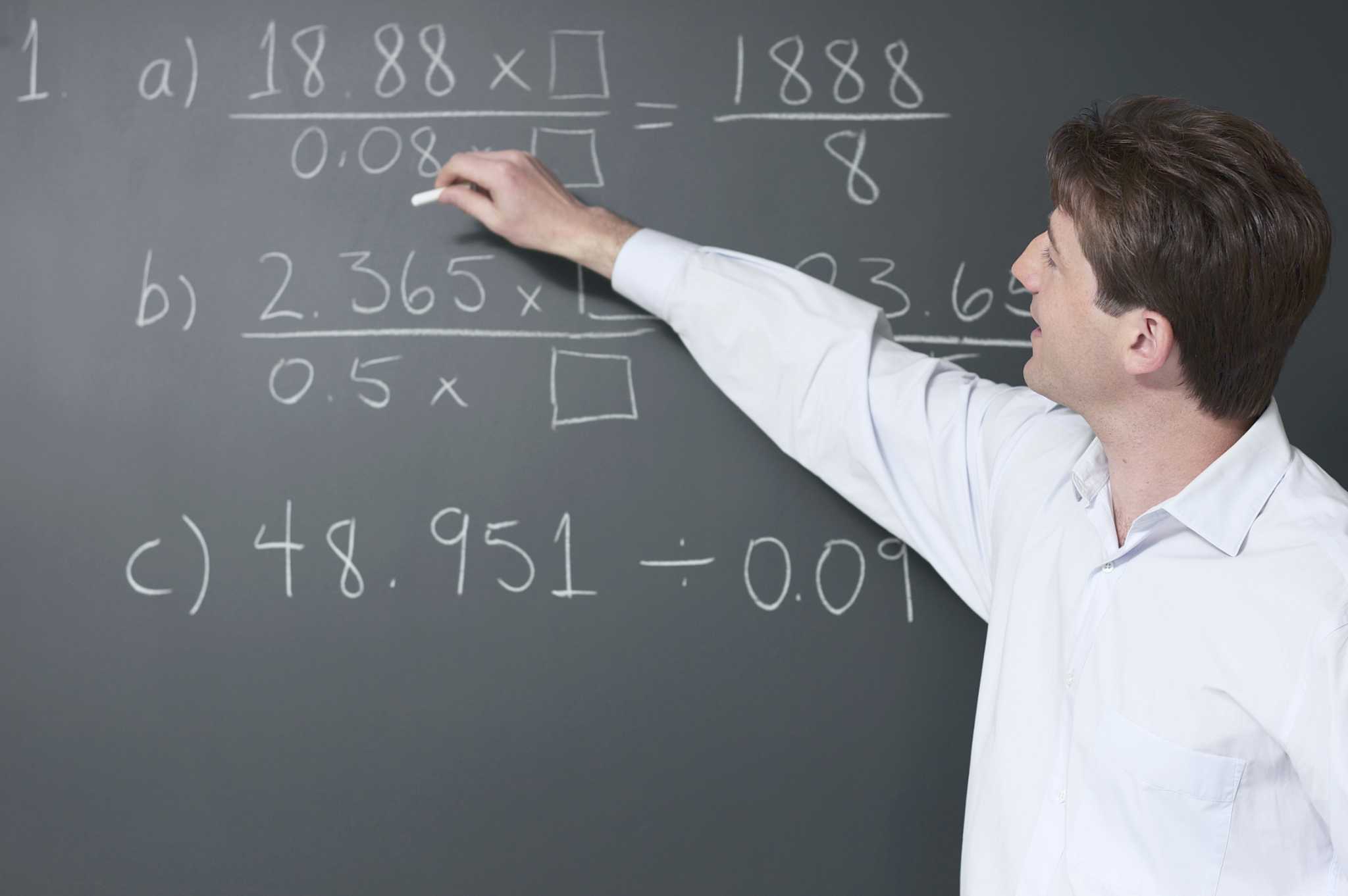
Overview of the SAT Math Section
The SAT exam is one of the most important tests required for admission to U.S. universities. Its math section evaluates students’ analytical thinking skills, logical reasoning, and problem-solving abilities. For many students, SAT Math may seem like just a “set of exercises,” but in reality, this section measures fundamental skills necessary for success at the university level. Therefore, becoming familiar with SAT math questions and knowing their solutions significantly increases the chances of success.
Structure of SAT Math
The SAT Math section consists of two main parts: calculator-permitted questions and non-calculator questions. The non-calculator part tests students’ basic computation and algorithmic thinking skills, while the calculator section involves more complex functions, graphs, and statistical problems. Overall, the section includes both multiple-choice and open-ended (grid-in) questions.
Types and Categories of Questions
SAT math questions are divided into several categories:
- Algebra and Equations (linear and quadratic equations, equalities and inequalities)
- Geometry (trapezoids, triangles, circles, volume, and area problems)
- Functions and Graphs (function analysis, transformations on graphs)
- Statistics and Probability (mean, median, mode, standard deviation, probability calculations)
Why Are SAT Math Questions Important?
The results of the SAT Math section are crucial not only for university admission but also for earning scholarships. A high score demonstrates a student’s analytical skills and provides a significant advantage for those planning to study in STEM (Science, Technology, Engineering, Mathematics) fields. In other words, success in SAT Math can be the key to opening the doors of a university.
Main Topics and Frequently Asked Questions
Although SAT math questions cover a wide range of topics, certain categories appear more frequently in the exam. In this section, let’s focus on those topics and their importance.
Algebra and Equations
Algebra is considered the “foundation” of SAT Math. In the exam, students are often required to solve equations for x, simplify expressions, and find the solutions of inequalities. One of the most common examples is quadratic equations. Sometimes they are solved using the discriminant method,other times by simple factorization. To save time in algebra questions, the best approach is to master different methods: factorization, completing the square, and applying the quadratic formula.
Geometry and Figures
Geometry questions often confuse students. Especially triangles’ angles, the radius and area of circles, and volume problems frequently appear in the exam. The most important point in the SAT exam is to memorize geometry formulas:the area of a triangle, the Pythagorean theorem, circumference of a circle, the volume of a cylinder, etc. One of the most common mistakes in this topic is forgetting or misapplying a formula.
Functions and Graphs
Functions and graphs are among the core parts of modern mathematics. In SAT questions, students are often asked about the rate of change of a function, vertical and horizontal shifts on graphs, as well as compression and stretching. If you know the fundamental rules of graphs well, this type of question can be an easy way to score points in the exam.
Statistical Analysis and Probability
Statistics and probability questions are usually related to real-life scenarios. For example, finding the mean, median, or mode of a group of people’s ages. In probability questions, simple combinatorics and probability formulas are applied. The most important aspect here is to calculate results quickly and provide accurate answers..
Advanced Mathematical Reasoning Questions
Some questions require not just knowing formulas but also logical analysis. For example, determining the increasing and decreasing intervals of functions, solving complex systems of equations, or deriving an answer based on a model. These types of questions are often considered difficult, but with the right approach, they can also be solved with ease.
Best Approaches for Solving Questions
To succeed in SAT Math, mathematical knowledge alone is not enough – strategy is equally important. Exam time is limited, and approaching each question correctly can significantly boost a student’s score.
Step-by-Step Solving Method
One of the best techniques to avoid confusion when facing a question is the step-by-step approach:
-
Carefully read what the question is asking.
-
Note down the given information and underline important numbers.
-
Choose the appropriate formula.
-
Perform calculations accurately.
-
Check your answer.
Shortcut Techniques
Not all questions require lengthy calculations. Some SAT questions are specifically designed for experienced students to solve usingshortcuts. For example, testing answer choices one by one, applying symmetry rules, or estimating approximate answers are excellent methods for saving time.
Results and Final Thoughts
The SAT Math section is not only about testing mathematical knowledge but also about logical reasoning, time management, and applying the right strategies.Learning the most common questions and their solution methods helps students feel confident during the exam and significantly improve their results.
If you dedicate time daily to practice, reinforce frequently tested topics, and master shortcut techniques, questions that seem difficult will become much easier. Remember, the SAT is not just a test of knowledge, but also a test of strategic thinking..
In the end, keep these three key points in mind to achieve success:
-
Build a strong foundation in topics – memorize the essential formulas and rules.
-
Practice regularly – make it a habit to solve at least a few questions every day.
-
Manage time and focus wisely during the exam – don’t approach every question the same way, choose smart strategies.
With the right preparation plan, SAT Math questions won’t be a problem for you; instead, they will turn into the best opportunity to earn extra points.
Click here to get detailed information about SAT Math preparation.